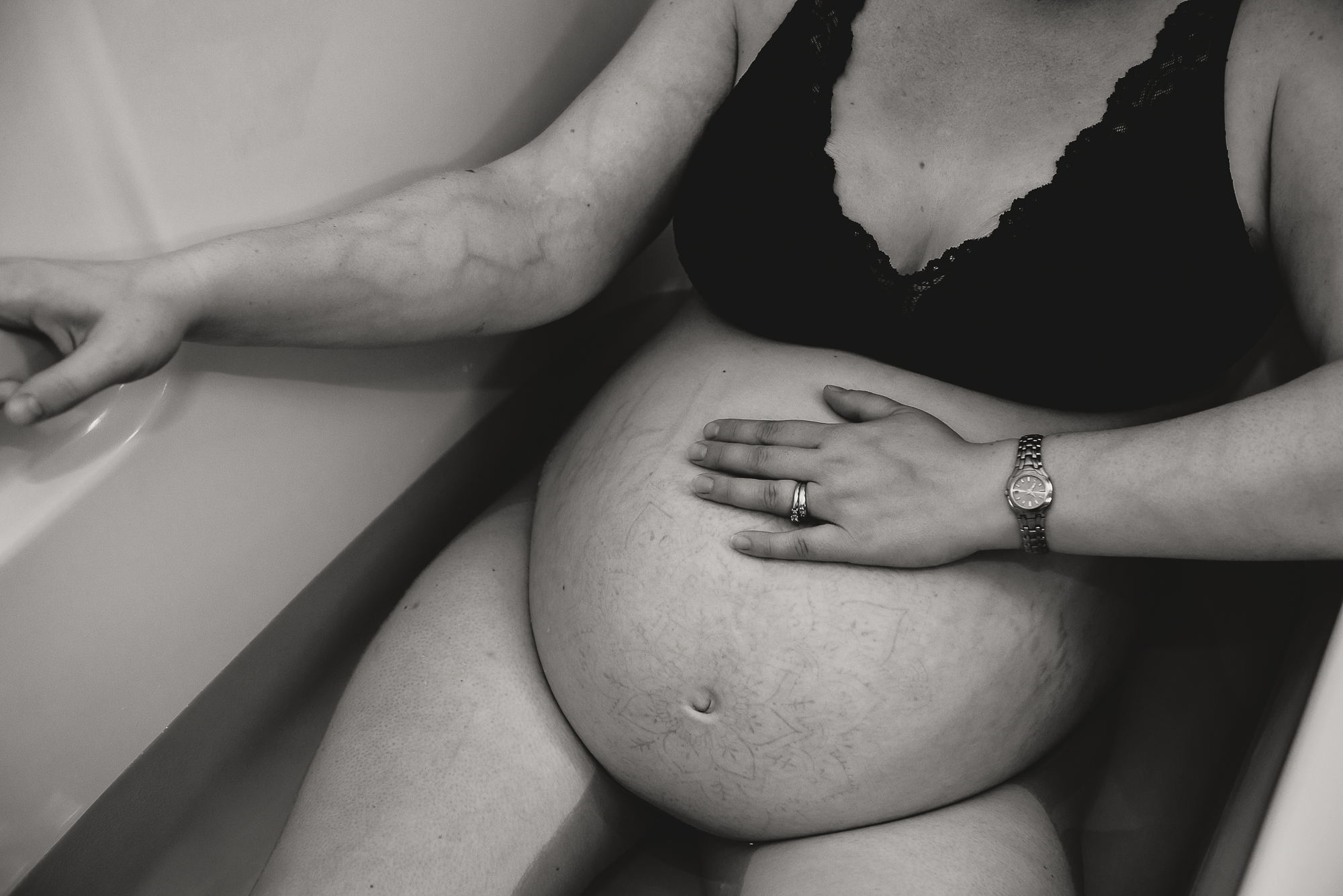
You have thought about who will be in the room. You have thought about the pool, the supplies, the midwife. But have you thought about what the room will smell like at 3 AM? What will be playing quietly in the background? Where the light will come from?
The sensory environment of your birth space is not decoration. It is a functional part of your labour support team — one that operates continuously, without needing a break, and without saying the wrong thing at the wrong moment.
Lighting
The single most important change you can make to any birth space is to eliminate overhead fluorescent or bright white light. Birth is a nocturnal, mammalian process. Melatonin — which facilitates oxytocin release — is suppressed by bright light. Your body will labour more easily, and more willingly, in dim, warm light.
String lights. Himalayan salt lamps. Candles (battery-powered if you are concerned about safety). A lamp with a warm-toned globe. Any combination of these. Test it before labour: stand in the space at night with only your birth lighting active and notice how your body feels. It should feel like somewhere you could rest.
Sound
Create a playlist before labour. This sounds simple. It is actually important. The music you choose should be slow, instrumental where possible, without abrupt changes in tempo or key. Music that surprised you at one point is music that will surprise your nervous system at an inopportune moment.
The birth space is a curated environment. Every element in it either supports you or competes with you.
Consider also: silence. Many women find that their need for music changes during transition, and that what they want in active labour is simply quiet. Have a plan for this too — someone who can turn the music off without asking whether you want them to.
What to avoid
Television. Podcasts with conversation and laughter. Any sound that carries linguistic content your brain will try to process. In labour, the thinking brain needs to step back. Sound that demands comprehension keeps it engaged.
Scent
The olfactory system has a direct pathway to the limbic system — the emotional and instinctual brain. This is why certain scents can shift your state almost instantly, and why the scent of your birth space matters.
Choose one or two essential oils and use them consistently in the weeks before birth — in your bath, in a diffuser while you practice breathing, before sleep. By the time labour arrives, your nervous system will associate those scents with calm. They become an anchor.
Lavender is the obvious choice, and it works. Clary sage is traditionally associated with labour support (note: avoid before 37 weeks). Frankincense is grounding. Choose what resonates with you — the association you build matters more than the specific oil.
Temperature
Often overlooked. The room should be warm — warmer than you think, perhaps 22–24°C. A labouring woman generates significant heat, but she will also feel cold between contractions. Have layers available. Have warm towels. Think about this in advance.
This essay is part of the ongoing Journal at The Home Birth Path. The full Preparation Guide includes a complete birth space setup checklist.