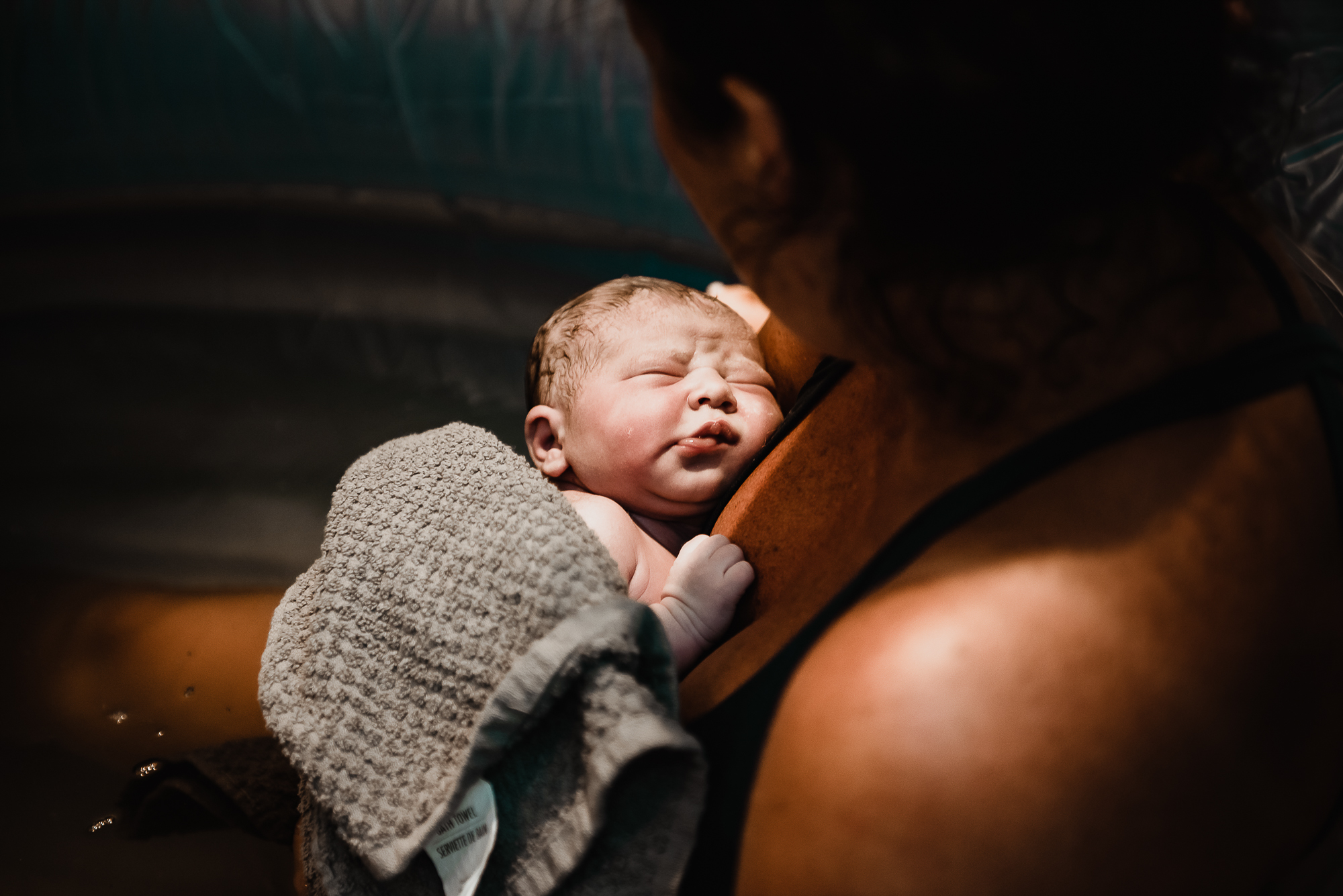
In the months before birth, your nervous system is doing something important: it is building a picture of what birth looks like. Every story you hear, every scene you watch, every account you read becomes part of that picture — and on the day, it will shape what your body expects to happen.
This is why the question of what you consume in pregnancy is not a minor lifestyle preference. It is preparation.
What the research tells us
Fear activates the sympathetic nervous system — the fight-or-flight response. When the sympathetic nervous system is activated during labour, it works directly against the hormonal cascade that allows birth to progress. Adrenaline and oxytocin are antagonists. You cannot be flooded with fear and flooded with the hormones of birth simultaneously.
This is not a metaphor. It is physiology. And it means that the birth stories you have saturated yourself with in pregnancy are, in a very real sense, writing the first draft of your own.
You will not unsee what you have seen. Choose what you see.
The problem with most birth content
Dramatic births make compelling content. The unexpected complication. The last-minute decision. The rush of medical intervention that saves the day. These stories are not false — they happen — but they represent a small fraction of births and an enormous fraction of what is shared, watched, and remembered.
If nine of the ten birth stories in your head end in emergency, your body will approach labour expecting emergency. This matters.
What we choose instead
Calm, ordinary birth accounts
Instagram and YouTube have made it easier than ever to find documented home births, water births, and unmedicated hospital births where nothing dramatic happens — a baby arrives, a mother births, and the overwhelming feeling is quiet awe rather than crisis. Find these. Watch many of them. Let the ordinary become familiar.
Books written from a place of trust
Ina May Gaskin's accounts. Sheila Kitzinger's writing. Gentle Birth, Gentle Mothering. These are works written by people who have attended hundreds or thousands of births and whose baseline is: this works. The body knows. Immerse yourself in that perspective.
Podcasts with experienced midwives
There are now excellent podcast series featuring midwives, doulas, and home birth mothers speaking calmly and in detail about the experience of birth. These are particularly valuable because they normalise the sensations and stages of labour in a way that reduces surprise — and surprise in labour tends to register as threat.
A note on well-meaning people
Your aunt, your colleague, your neighbour — they may mean well, and they may want to share their birth story. You do not have to receive it. A simple "I'm being careful about what I take in during pregnancy" is complete. You don't owe anyone your nervous system.
This essay is part of the ongoing Journal at The Home Birth Path. Read next: A short reading list for sovereign mothers.